

Comprendre ton SOMP, enfin clairement

Ce que tu traverses est réel et largement sous‑estimé.

Des questions, des réponses
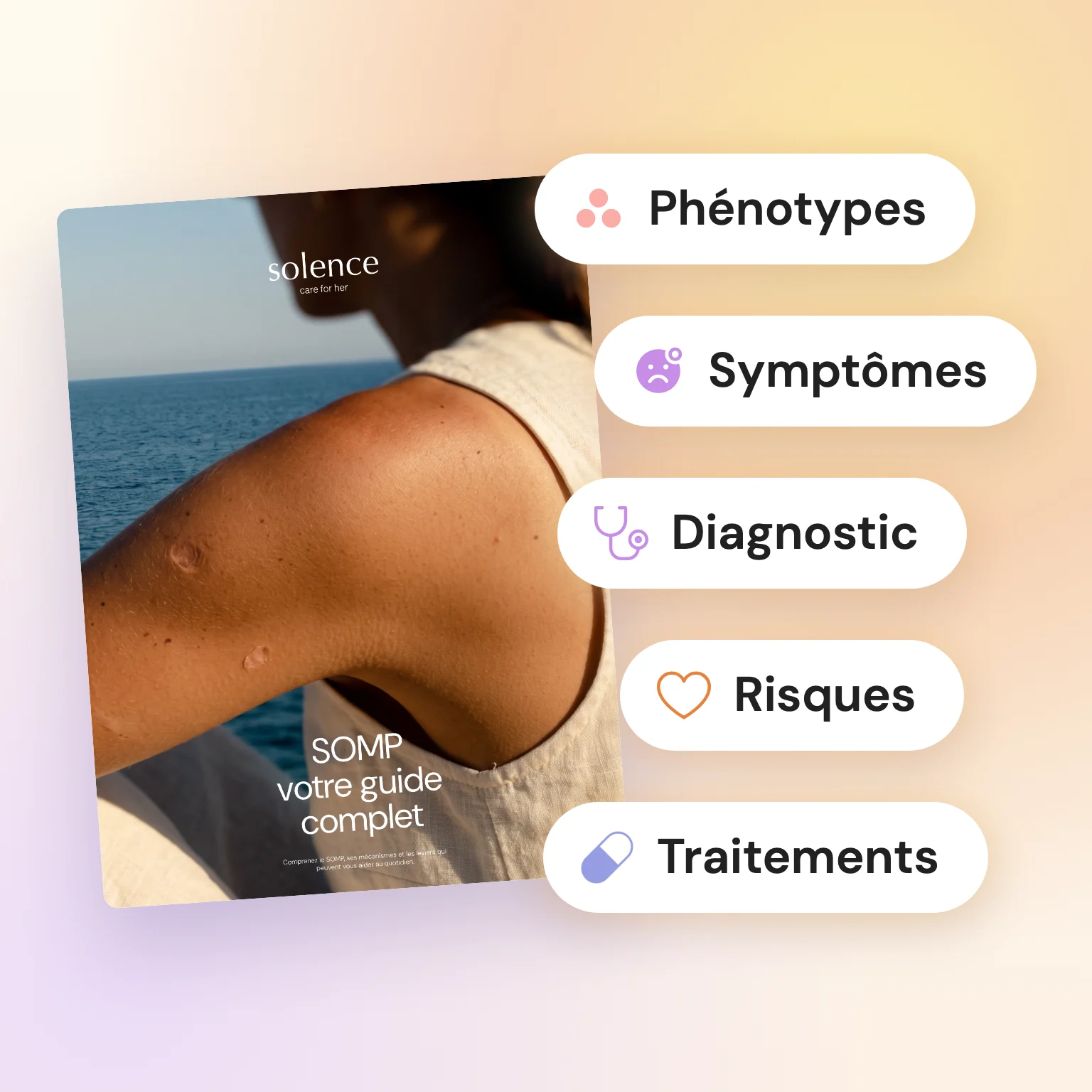
Dans le chapitre 1, tu comprendras comment se pose le diagnostic, ce que sont les quatre phénotypes, et quels symptômes et risques y sont liés.
Dans le chapitre 2, tu comprendras d'où vient le SOMP et ce qui se passe dans ton corps, dont le rôle central de l'insuline.
Dès l'avant-propos, tu liras que non : ce n'est pas ta faute, et ce n'est pas un manque de volonté.
Dans le chapitre 1, tu verras que le SOMP n'est pas qu'un enjeu de fertilité, et quelles questions poser à ton médecin.
Dans le chapitre 3, tu sauras comment faire face au diagnostic, t'entourer, et avancer à ton rythme.
Dans le chapitre 4, tu verras ce que la science dit des traitements et du mode de vie, et ce qu'elle ne dit pas encore.
Écrit avec le Pr Michel Pugeat.

Un guide basé sur la science
- Teede HJ, Tay CT, Laven JJE, et al. Recommendations From the 2023 International Evidence-based Guideline for the Assessment and Management of Polycystic Ovary Syndrome. J Clin Endocrinol Metab. 2023;108(10):2447-2469. PMID: 37580314
- Van der Ham K, et al. Anti-müllerian hormone as a diagnostic biomarker for PCOS and polycystic ovarian morphology: a systematic review and meta-analysis. Hum Reprod Update. 2024. PMID: 38944177
- Rotterdam ESHRE/ASRM-Sponsored PCOS Consensus Workshop Group. Revised 2003 consensus on diagnostic criteria and long-term health risks related to PCOS. Fertil Steril. 2004;81(1):19-25. PMID: 14711538
- Amisi CA. Markers of insulin resistance in Polycystic ovary syndrome women: An update. World J Diabetes. 2022;13(3):129-149. PMID: 35432749
- Rudnicka E, Suchta K, Grymowicz M, et al. Chronic Low Grade Inflammation in Pathogenesis of PCOS. Int J Mol Sci. 2021;22(7):3789. PMID: 33917519
- Orisaka M, Mizutani T, Miyazaki Y, et al. Chronic low-grade inflammation and ovarian dysfunction in women with PCOS, endometriosis, and aging. Front Endocrinol. 2023;14:1324429. PMID: 38192421
- Carmina E, Longo RA. Increased Prevalence of Elevated DHEAS in PCOS Women with Non-Classic (B or C) Phenotypes. Cells. 2022;11(20):3255. PMID: 36291122
- Spritzer PM, Barone CR, de Oliveira FB. Hirsutism in PCOS: Pathophysiology and Management. Curr Pharm Des. 2016;22(36):5603-5613. PMID: 27510481
- Ramezani Tehrani F, et al. Prevalence of acne vulgaris among women with PCOS: a systematic review and meta-analysis. Gynecol Endocrinol. 2021;37(5):392-405. PMID: 33355023
- Quinn M, et al. Prevalence of androgenic alopecia in patients with PCOS and characterization of associated features. Fertil Steril. 2014;101(4):1129-1134. PMID: 24534277
- Cooney LG, Lee I, Sammel MD, Dokras A. High prevalence of moderate and severe depressive and anxiety symptoms in PCOS: a systematic review and meta-analysis. Hum Reprod. 2017;32(5):1075-1091. PMID: 28333286
- Infante-Cano M, et al. The prevalence and risk of anxiety and depression in PCOS: an overview of systematic reviews with meta-analysis. Arch Womens Ment Health. 2024. PMID: 39453529
- Lee I, Cooney LG, Saini S, et al. Increased odds of disordered eating in PCOS: a systematic review and meta-analysis. Eat Weight Disord. 2019;24(5):787-797. PMID: 29947018
- Mathur R, et al. Polycystic ovary syndrome is associated with an increased prevalence of irritable bowel syndrome. Dig Dis Sci. 2010;55:1085-1089. PMID: 19697132
- Churchill SJ, Wang ET, Pisarska MD. Metabolic consequences of PCOS. Minerva Ginecol. 2015;67(6):545-555. PMID: 26372304
- Tay CT, et al. Insights From a Systematic Review and Meta-Analysis on Elevated Cardiovascular Disease in PCOS. J Am Heart Assoc. 2024;13(16):e033572. PMID: 39119982
- Yu HF, et al. Association between PCOS and the risk of pregnancy complications: a systematic review and meta-analysis. Medicine (Baltimore). 2016;95(51):e4925. PMID: 28002314
- Hu X, et al. Correlation between Hashimoto's thyroiditis and PCOS: a systematic review and meta-analysis. Front Endocrinol. 2022;13:1025267. PMID: 36387911
- Vink JM, et al. Heritability of polycystic ovary syndrome in a Dutch twin-family study. J Clin Endocrinol Metab. 2006;91(6):2100-2104. PMID: 16219714
- Bruni V, et al. The Role of Genetics, Epigenetics and Lifestyle in PCOS Development: the State of the Art. Reprod Sci. 2022;29(3):668-679. PMID: 33709373
- Chaudhari N, Dawalbhakta M, Nampoothiri L. GnRH dysregulation in PCOS is a manifestation of an altered neurotransmitter profile. Reprod Biol Endocrinol. 2018;16:34. PMID: 29642911
- Jala A, et al. Implications of endocrine-disrupting chemicals on PCOS: a comprehensive review. Environ Sci Pollut Res Int. 2022;29(36). PMID: 35778660
- Xita N, Tsatsoulis A. Fetal programming of PCOS by androgen excess. J Clin Endocrinol Metab. 2006;91(5):1660-1666. PMID: 16522691
- Wu J, et al. Effectiveness of acupuncture in PCOS: a systematic review and meta-analysis of RCTs. Medicine (Baltimore). 2020;99(22):e20441. PMID: 32481448
- Davis SE, et al. Weekly Osteopathic Manipulative Treatment to Improve Measures of Sympathetic Tone in Women With PCOS: A Randomized, Controlled Pilot Study. J Am Osteopath Assoc. 2020;120(5):310-321. PMID: 32337566
- Hu J, et al. Complementary and Alternative Medicine for Abnormal Endometrial Conditions in Women with PCOS: a systematic review and meta-analysis of RCTs. Evid Based Complement Alternat Med. 2021;2021:5536849. PMID: 34012472
- Alesi S, Forslund M, Melin J, et al. Efficacy and safety of anti-androgens in the management of PCOS: a systematic review and meta-analysis of RCTs. EClinicalMedicine. 2023;63:102162. PMID: 37583655
- Morley LC, et al. Insulin-sensitising drugs for women with PCOS, oligo-amenorrhoea and subfertility. Cochrane Database Syst Rev. 2017;11:CD003053. DOI: 10.1002/14651858.CD003053.pub6
- Morais BAH, et al. The efficacy and safety of GLP-1 agonists in PCOS women living with obesity: a meta-analysis of RCTs. J Diabetes Complications. 2024;38(10). PMID: 39178623
- Fitz V, et al. Inositol for PCOS: a systematic review and meta-analysis to inform the 2023 Update of the International Evidence-based PCOS Guidelines. J Clin Endocrinol Metab. 2024;109(1):e268-e281. PMID: 38163998
- Greff D, et al. Inositol is an effective and safe treatment in PCOS: a systematic review and meta-analysis of RCTs. Reprod Biol Endocrinol. 2023;21:13. PMID: 36703143
- Juhász EA, et al. Ranking the dietary interventions by their effectiveness in the management of PCOS: a systematic review and network meta-analysis. Reprod Health. 2024. PMID: 38388374
- Rodriguez Paris V, et al. Defining the impact of dietary macronutrient balance on PCOS traits. Nat Commun. 2020;11:5262. PMID: 33067453
- Cirone D, et al. Health-related physical fitness in women with PCOS versus controls: a systematic review and meta-analysis. Arch Gynecol Obstet. 2024;309(1). PMID: 36920532
- Tan Z, et al. A network meta-analysis of interventions for anxiety and depression in PCOS. PeerJ. 2026. PMID: 41664652
- Zhang J, et al. Sleep disturbances, sleep quality, and cardiovascular risk factors in women with PCOS: systematic review and meta-analysis. Front Endocrinol. 2022. PMID: 36176474
- Teede H, Khomami M, Norman R, et al. Polyendocrine metabolic ovarian syndrome, the new name for polycystic ovary syndrome: a multistep global consensus process. The Lancet. Online first, May 12, 2026.
Tu n'as pas besoin d'un effort de plus. Tu as besoin de réponses.
Ce guide prend tes questions une par une, et va au bout. Gratuit, à lire dans l'ordre que tu veux.
Télécharger le guideCe guide n'est pas une promesse miracle.
Clara
Porté par Clara Stephenson

Notre comité scientifique pluridisciplinaire

Pr Michel Pugeat

Dr Nour El Houda Mimouni

Dr Anne-Hélène Spizzo

Dr Pascale Mirakian

Dr Christian Jamin

Dr Odile Bagot

Dr Fanny Jacq
Dr Maëliss Peigné
Comprendre ton SOMP, enfin clairement
Un aperçu du guide
Ils parlent de nous








Et maintenant ?
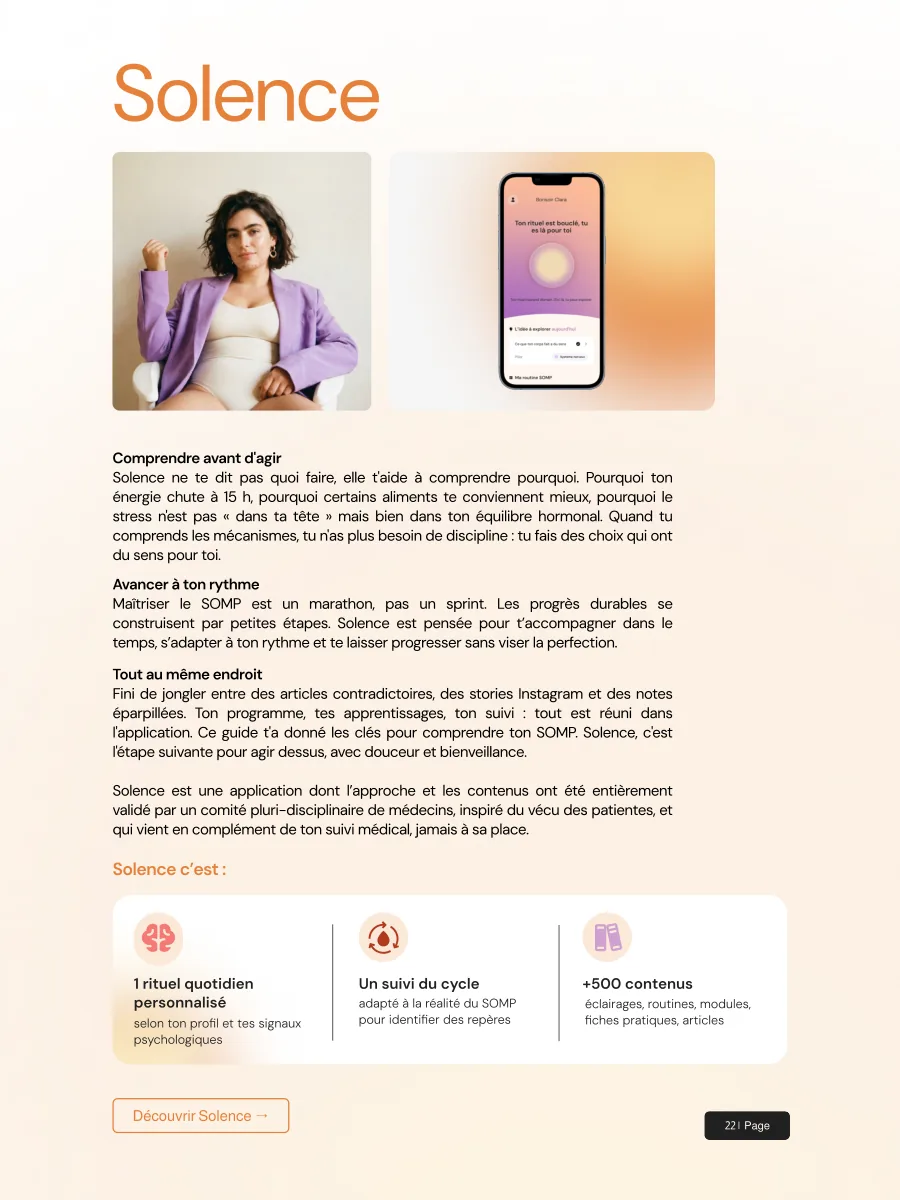
Solence est construit sur les quatre piliers que tu viens de découvrir, alimentation, activité physique, gestion du stress, sommeil, et fondé sur la littérature scientifique. Chaque jour, l'application te propose un rituel personnalisé selon ton profil.

Questions fréquentes
Il s'adresse à toutes les femmes qui se posent la question de savoir si leur cycle menstruel, leur équilibre hormonal et leur métabolisme sont normaux.
Tu le connais peut-être sous son ancien nom : syndrome des ovaires polykystiques (SOPK), ou PCOS en anglais. En 2026, un consensus international a acté ce changement de nom pour mieux refléter ce qui se joue vraiment : un dérèglement à la fois hormonal et métabolique, pas seulement une histoire d'ovaires.
Non. Ce guide ne fournit pas de conseils médicaux. Les informations qu'il contient s'appuient sur la littérature scientifique. Elles éclairent, elles ne prescrivent pas. En cas de doute sur un symptôme ou un traitement, parles-en à un professionnel de santé qui te connaît.
Oui. Il est gratuit, à lire dans l'ordre que tu veux.

